
C1(上級) · 🎎 文化 · 408語 · 約3分
The Global Rise of Japanese Words in English
英語に溶け込む日本語 ― 津波・絵文字・カラオケ・うま味の軌跡
tsunami、emoji、karaoke、umami――なぜ日本語の語彙は英語圏をはじめ世界中の言語に浸透したのか。文化の受容、科学的認知、デジタル時代の言語変遷の視点からその軌跡を紐解きます。
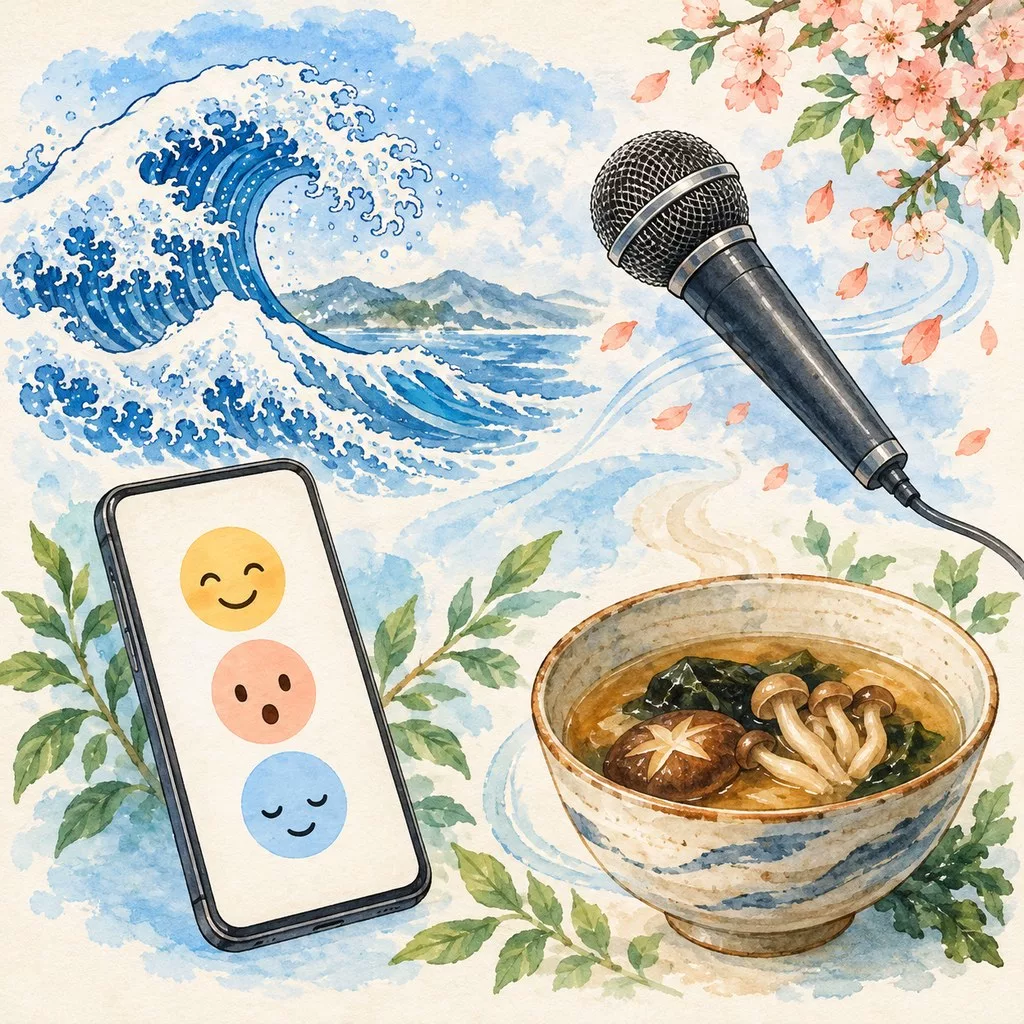
When the Oxford English Dictionary expands its , new from Japanese are often among the additions. Far from remaining exotic curiosities confined to guidebooks, many Japanese terms have become thoroughly within contemporary English. Words such as tsunami, karaoke, emoji, and umami are spoken worldwide by millions who have never visited Japan or studied its grammar. This reveals how cultures absorb foreign vocabulary when an imported word captures an experience that native expressions fail to convey.
Consider the word tsunami, which literally translates as harbour wave. Historically, English speakers referred to destructive ocean surges caused by as tidal waves. However, oceanographers realized that the phenomenon had nothing to do with gravitational lunar tides. Partly because Japan has a long recorded history of such waves, the word tsunami gradually became the accepted internationally during the twentieth century.
In popular entertainment, karaoke illustrates how leisure culture national borders. Its name blends the Japanese words for empty and orchestra, and the invention transformed casual social gatherings in the late twentieth century. Like many loanwords, karaoke entered English largely unchanged, and it now appears in compounds such as karaoke bar and karaoke night. It came to represent not just mechanical audio playback, but a relatively pastime in which amateurs take turns singing for friends.
The digital age accelerated this lexical exchange through the worldwide of emoji. The word combines e, meaning picture, and moji, meaning character, and an influential early set was designed by Shigetaka Kurita in nineteen ninety-nine. Many English speakers assume the word is related to emotion, but its Japanese shows that the resemblance is a coincidence. By supplying visual emotional cues in text messages, emoji helped to restore some of the tone that plain digital text can easily lose.
A parallel trajectory unfolded within culinary science regarding umami, the savoury fifth basic taste. First identified in nineteen oh eight by chemist Kikunae Ikeda, umami long faced among Western physiologists. Nearly a century later, the discovery of specific on the human tongue helped to confirm Ikeda's original insight. Today, many chefs and food scientists around the world regard umami as an element of flavour balance.
These linguistic adoptions highlight a dynamic process whereby vocabulary reflects human curiosity, scientific precision, and technological evolution. As cross-cultural exchange deepens in our interconnected world, more Japanese loanwords are likely to find their way into English and other languages.
理解度チェック(4問)
1. 本文によると、「tidal wave」という呼び方が科学的に適切でないとされたのはなぜですか?
2. 「emoji」という単語は、もともと英語の「emotion(感情)」が語源である。
3. 池田菊苗が発見した「うま味(umami)」が西洋の生理学者に科学的に認められた契機は何でしたか?
4. この記事全体の中心的な要点として最も適切なものはどれですか?
最後まで読んで、理解度チェックに答えると「読み終わった」になります(0 / 6 段落)